

Understanding in-home dementia care costs allows families to plan support before their loved one’s needs become urgent. Expenses can vary widely because some people need only a few hours of companionship each week, while others require continuous supervision.
Location, dementia progression, caregiver training, and scheduling also influence the final rate. This guide explains typical hourly and monthly prices, services included, possible financial assistance, and how home care compares with residential memory care.
1. How Much Do In-Home Dementia Care Costs?
In-home dementia care costs about $35 per hour nationwide, although rates vary by location, caregiver experience, and the level of support required. At 44 hours of care per week, that equals roughly $6,670 per month or $80,080 per year.
Families needing only a few hours of weekly companionship or personal care may pay much less. However, costs can rise significantly when a person needs overnight supervision, help with behavioral symptoms, skilled nursing, or 24-hour care.
The CareScout Cost of Care Survey provides location-based estimates for comparing care options.
| Care Schedule | Estimated Hours | Approximate Monthly Cost |
| Occasional support | 10 hours per week | $1,470 |
| Part-time care | 20 hours per week | $2,940 |
| Full-time daytime care | 40 hours per week | $5,890 |
| 12-hour daily care | 84 hours per week | $12,380 |
| Continuous 24-hour care | 168 hours per week | $24,750+ |
Estimates use a $34 hourly rate and 4.33 weeks per month. Agency minimums, overtime rules, and local prices may change the total.
2. What Factors Affect In-Home Dementia Care Costs?
While hourly rates provide a useful starting point, in-home dementia care costs ultimately depend on several personal and practical factors. Understanding these variables helps families estimate a more realistic monthly budget before choosing a care provider.
- Number of Care Hours Needed Each Day
Short visits for meals, bathing, or companionship are usually more affordable than full-day supervision. However, some agencies require a minimum number of hours per visit. As dementia progresses, a person may also need evening or around-the-clock support.
- Stage of Dementia and Level of Assistance
Someone with mild memory loss may mainly need reminders and companionship. A person with advanced dementia may require help with mobility, toileting, eating, personal hygiene, and safety monitoring. Greater care complexity generally leads to higher charges.
- Caregiver Qualifications and Specialized Training
Caregivers trained in dementia communication, behavioral support, fall prevention, or first aid may command higher rates. Skilled nursing services, such as wound care or injections, normally cost more than non-medical personal assistance.
- Weekends, Holidays, and Overnight Care
Agencies may charge premium rates for holidays, weekends, overnight shifts, or last-minute scheduling. Families should ask whether sleep time, overtime, transportation, and shift changes are billed separately.

>>> Read More: In Home Physical Therapy for Seniors: Benefits & Costs (2026)
3. What Services Are Included in the Average Cost of In-Home Dementia Care?
The average cost of in-home dementia care usually covers non-medical assistance that helps a person remain safe and comfortable at home. Exact services depend on the care plan and provider.
- Personal Care and Daily Living Assistance
Caregivers may assist with bathing, dressing, grooming, toileting, walking, transfers, and other activities of daily living. They can also establish familiar routines that reduce confusion.
- Medication Reminders and Health Monitoring
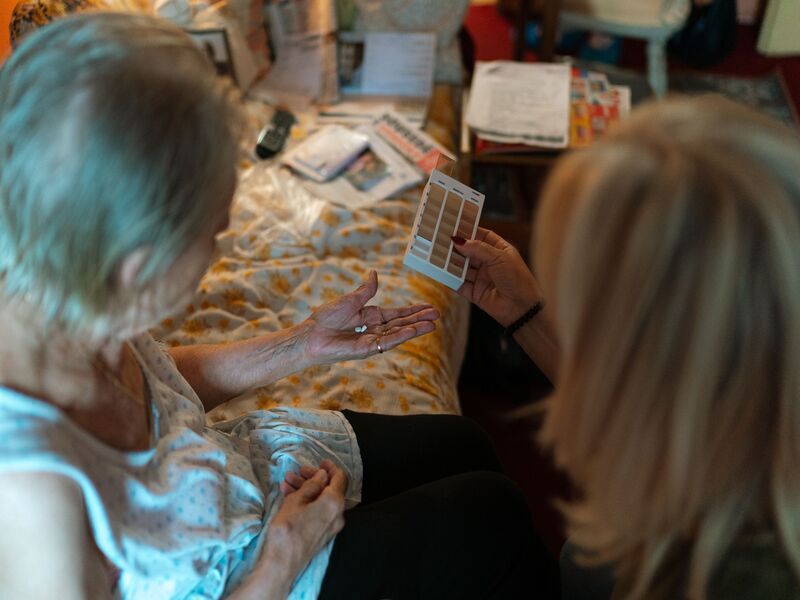
Non-medical caregivers can provide medication reminders and observe changes in appetite, mobility, sleep, or behavior. They generally cannot administer medication or perform clinical procedures unless appropriately licensed.
- Meal Preparation and Household Support
Services may include grocery planning, meal preparation, laundry, light cleaning, and organization. These tasks help maintain a safer home without replacing professional housekeeping or property maintenance.
- Companionship and Cognitive Engagement
Conversation, music, puzzles, familiar hobbies, and supervised walks may encourage engagement and reduce isolation. Activities should match the person’s abilities rather than test or pressure their memory.
4. Are There Additional Costs Beyond the Caregiver’s Rate?
Additional expenses may include agency assessment fees, transportation charges, mileage reimbursement, overtime, holiday premiums, and minimum-shift requirements.
Families might also need home safety improvements such as bathroom grab bars, better lighting, door alarms, or mobility equipment.
Medical supplies, meal ingredients, protective products, and backup care are not always included. Hiring a caregiver privately may reduce the hourly price, but the family could become responsible for payroll, taxes, insurance, background checks, and arranging substitute coverage.
Before signing an agreement, request a written estimate that distinguishes regular rates from optional services and potential surcharges.
5. Does Medicare Pay for In-Home Dementia Care?
Medicare generally does not pay for continuous custodial dementia care at home. It may cover limited, medically necessary home health services when eligibility conditions are met, but personal supervision, meal preparation, and ongoing daily assistance are usually not covered on their own.
The official Medicare home health services guide explains that coverage is intended for part-time or intermittent skilled care rather than continuous support.
Families managing in-home dementia care costs may consider several funding sources:
- Medicaid: State home and community-based programs may pay for eligible long-term services. Requirements and waiting lists vary. Families can review the Medicaid HCBS information.
- Long-term care insurance: Some policies cover qualified personal care or home health services.
- Veterans’ benefits: Eligible veterans and surviving spouses may receive assistance.
- PACE: Available programs may coordinate medical and community support for qualifying older adults who can remain safely at home.
- Personal funds: Savings, pensions, retirement income, and family contributions remain common payment methods.
- Community programs: Local respite care, adult day services, or nonprofit programs may reduce unpaid caregiver pressure.
>>> Check more: Cost of In Home Care for Seniors: 2026 Pricing Guide & Ways to Save
6. Is In-Home Dementia Care More Affordable Than Residential Memory Care?
In-home dementia care is often more affordable when a person needs only part-time support. However, residential memory care may offer better value and more predictable costs when continuous supervision is required.
| Cost Consideration | In-Home Dementia Care | Residential Memory Care |
| Pricing structure | Usually hourly | Usually monthly |
| Part-time estimate | $1,500–$5,900 per month | Generally unavailable |
| Full-time or 24-hour estimate | $5,900–$24,000+ per month | About $6,700–$8,000 per month |
| Housing and meals | Paid separately | Commonly included |
| Supervision | Limited to scheduled hours | Available 24 hours |
| Best suited for | Limited or moderate support | Extensive safety and supervision needs |
Families should compare the full cost of housing, meals, utilities, home modifications, and unpaid caregiving, not just the caregiver’s hourly rate.
For a broader comparison, read our guide to memory care vs. nursing homes.
7. FAQs
When Should a Person With Dementia Stop Living Alone?
A person with dementia may need to stop living alone when they become lost, leave appliances on, miss medications, fall frequently, cannot prepare meals, or cannot respond safely in an emergency. A care assessment can help determine whether home care, live-in support, or residential care is appropriate.
Is It Better to Keep a Dementia Patient at Home?
Staying at home may be beneficial when the environment is safe and reliable care is available. Residential care may be better when the person needs continuous supervision or more support than the family can provide. The decision should consider safety, care needs, costs, and caregiver well-being.
What Is the Life Expectancy of a Person With Late-Stage Alzheimer’s?
There is no exact timeline for late-stage Alzheimer’s. This stage may last from several weeks to several years, depending on the person’s age, health, mobility, nutrition, and medical conditions. Across all stages, people with Alzheimer’s often live four to eight years after diagnosis, although some live longer.
What Stage of Dementia Is Not Bathing?
Bathing difficulties often develop during the middle or later stages of dementia. A person may forget the steps, fear water, feel embarrassed, experience pain, or resist help. Because bathing refusal can also result from illness or discomfort, sudden changes should be discussed with a healthcare professional.
Conclusion
Planning for in-home dementia care costs involves more than calculating hourly rates. Families should also consider changing care needs, overnight supervision, household expenses, agency fees, and home safety modifications.
Part-time care can help a person remain at home longer, but residential memory care may become more cost-effective when continuous support is needed. Comparing written estimates and exploring financial assistance early can help families make a safer, more sustainable decision.