
Years of sitting, a weakened upper back, and tight chest muscles slowly pull the shoulders forward and the head out of alignment. Posture exercises for seniors target those specific muscles, rebuilding the strength needed to hold the spine upright without constant effort.
This guide covers a simple 10-minute daily routine, step-by-step instructions for each exercise, and ways to improve posture during everyday sitting, standing, and walking.
1. 10 Daily Posture Exercises for Seniors (Simple Morning Routine)
A simple 10- to 15-minute posture routine can help seniors work on upper-back strength, shoulder mobility, core control, and upright body awareness. These exercises can be performed once daily, moving slowly and using a chair or wall for support when needed.
- Chin Tucks: Help align the head and strengthen muscles that support the neck.
- Shoulder Rolls: Loosen tight shoulders and encourage smoother upper-body movement.
- Shoulder Blade Squeezes: Strengthen the upper back and encourage the shoulders to sit farther back.
- Wall Angels: Work on shoulder mobility and upper-back positioning.
- Chest Stretch: Opens tight chest muscles that can contribute to rounded shoulders.
- Seated Torso Twists: Support gentle spinal mobility and trunk control.
- Arm Raises: Improve shoulder movement while practicing an upright posture.
- Pelvic Tilts: Build awareness and control of the pelvis and lower back.
- Isometric Rows: Activate the back muscles without requiring large movements.
- Standing Tall: Reinforces balanced, upright posture during everyday standing.
Perform each movement comfortably and stop if it causes pain, dizziness, or unusual discomfort. Detailed instructions for each exercise are provided in Section 3 below.
2. Why Posture Matters More as You Age
Good posture becomes increasingly important with age because changes in muscle strength, joint mobility, bone health, and balance can make it harder to maintain an upright position.
Over time, habits such as prolonged sitting or looking downward can also contribute to a forward head position, rounded shoulders, and a more stooped stance.
Maintaining better alignment may help seniors:
- Reduce unnecessary strain: Better positioning can decrease stress on the neck, shoulders, and lower back.
- Support balance and stability: Keeping the head and torso more centered over the feet can make standing and walking feel steadier.
- Move more efficiently: Upright posture can make everyday activities such as walking, reaching, and getting up from a chair easier.
- Allow fuller breathing: A less-collapsed chest position gives the rib cage more room to expand.
- Maintain functional independence: Strength and posture control support many daily tasks, from carrying groceries to climbing stairs.
Posture does not usually improve through one intense workout. Regular practice that combines mobility, strength, and body awareness is generally more useful than occasional long sessions.
3. Best Posture Exercises for Seniors
Each exercise below targets a specific part of the postural chain, from the neck down through the lower back. Proper form matters more than speed or repetition count, especially with the neck and spine involved. Seniors can follow the steps for each one carefully and stop if anything causes pain.
Chin Tucks
This exercise counters the forward head position that develops from years of looking down at phones, books, and screens. It targets the deep neck muscles that hold the head over the shoulders.
- Sit or stand straight
- Slowly draw the head and chin straight back, not down, to align ears over shoulders
- Hold 3 to 5 seconds, repeat 5 times
Shoulder Rolls
Shoulder rolls loosen tight muscles across the upper back and neck before the more demanding exercises begin. This makes a good second step once the neck is aligned.
- Sit or stand with arms relaxed at the sides
- Roll both shoulders forward in a slow circle 5 times
- Reverse and roll backward 5 times
Shoulder Blade Squeezes
This move strengthens the mid-back muscles that pull the shoulders back into alignment. Weakness here is one of the main reasons shoulders round forward over time.
- Sit or stand tall
- Pull shoulder blades back and together, as if holding a pencil between them
- Hold 5 seconds, repeat 10 times
Wall Angels
Wall angels use the wall as a guide, making it obvious when the shoulders drift forward out of position. This gives immediate feedback that a freestanding exercise cannot.
- Stand with back against a wall, feet slightly forward
- Raise arms into a goalpost shape and slowly slide them up and down while keeping contact with the wall
- Repeat 5 to 8 times
Chest or Pec Stretch
Tight chest muscles actively pull the shoulders forward, so stretching them makes the strengthening exercises more effective. This one balances out the squeezing motion from exercise 3.
- Stand tall and interlock the hands behind the back
- Gently straighten the arms and pull the shoulders back, opening the chest
- Hold 15 to 20 seconds; repeat 3 times
Seated Torso Twists
Rotation keeps the mid-spine mobile, which stiffens with age and prolonged sitting. A seated position removes any balance demand from this movement.
- Sit upright in a sturdy chair
- Gently turn the upper body to one side, hold 5 seconds, switch sides
- Repeat 5 to 10 times per side
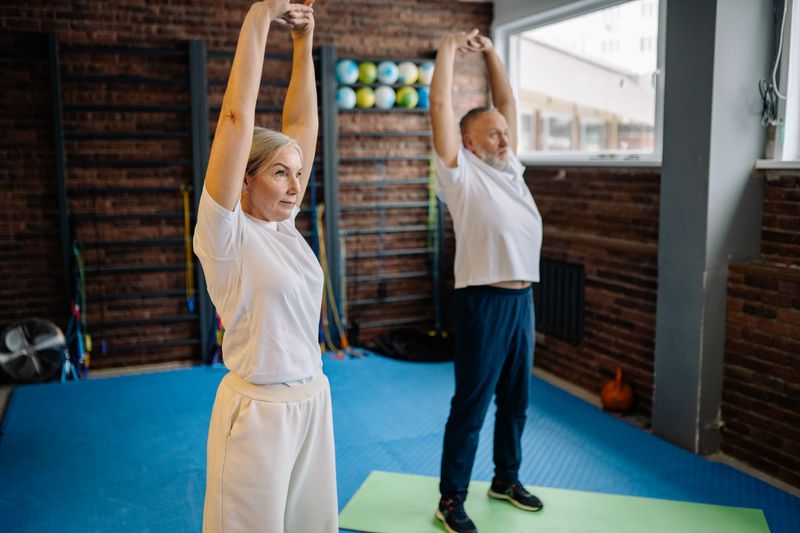
Arm Raises
Raising the arms overhead strengthens the shoulders and upper back through a fuller range of motion. Control on the way down matters as much as the lift itself.
- Stand or sit tall with arms at the sides
- Raise both arms slowly overhead, keeping the back straight
- Lower with control, repeat 8 to 10 times
Pelvic Tilts
Posture starts at the pelvis, and this exercise strengthens the abdominal muscles that stabilize the lower back. It also teaches what a neutral spine position actually feels like.
- Stand with back against a wall, feet slightly forward
- Flatten the lower back against the wall by gently tightening the abdomen
- Hold 5 seconds, repeat 8 to 10 times
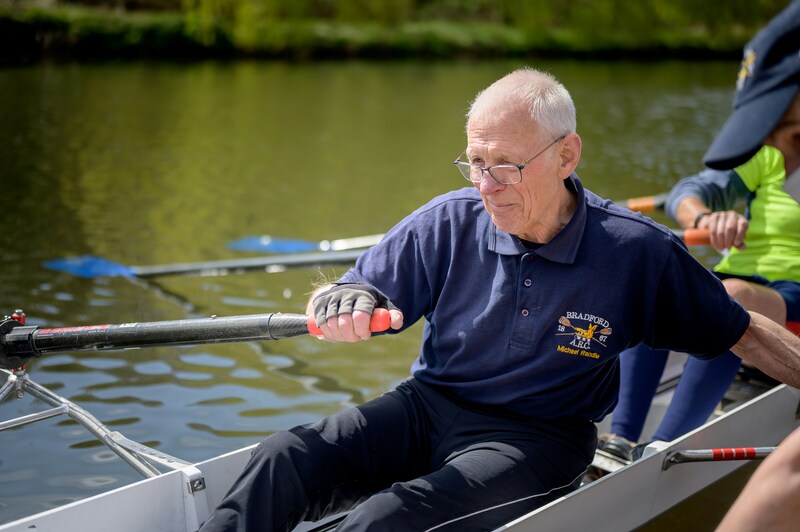
Isometric Rowing
This move builds mid-back strength without any equipment, using only the body’s own resistance. It reinforces the same muscles as the shoulder blade squeeze, with more arm involvement.
- Stand or sit tall with arms extended forward
- Pull the elbows back as if rowing, squeezing the shoulder blades together
- Hold 5 seconds, repeat 10 times
Standing Tall
The routine finishes by putting everything together into one held position. This trains the body to recognize proper alignment so it becomes easier to maintain during the day.
- Stand with feet shoulder-width apart
- Lift through the spine, letting the head sit naturally over the shoulders
- Hold 30 seconds to finish the routine
>>> Read more: 10 Safe Leg Strengthening Exercises for Seniors to Improve Balance
4. How to Improve Posture Throughout the Day
Ten minutes of exercise cannot undo the remaining fifteen hours spent sitting, standing, and walking with poor alignment. Small adjustments to everyday positions reinforce what the exercises build. The three situations below cover where most posture problems actually develop.
While Sitting
Sitting accounts for most of the day for many seniors, making it the biggest single influence on posture. A few setup adjustments can remove most of the strain.
- Keep feet supported flat on the floor or a footrest
- Position the screen or reading material at a comfortable height
- Avoid staying in one position for too long, and shift or stand every 30 to 45 minutes
While Standing
Standing posture often overcorrects, with people pulling the shoulders back so far that it creates new tension. A relaxed, balanced position works better than a forced one.
- Keep weight distributed comfortably across both feet
- Avoid consciously forcing the shoulders far back
- Let the head and neck remain in a natural position
While Walking
Walking posture tends to slip when the eyes drop toward the ground, which pulls the head and upper body forward. Adjusting the gaze corrects most of this automatically.
- Look ahead rather than constantly down at the path
- Keep arms relaxed and swinging naturally
- Maintain a comfortable, natural stride without lengthening it artificially
5. Safety Tips for Senior Posture Exercises
These exercises involve the neck and spine, which means form matters more than pushing for extra repetitions. Starting gently and building up over several sessions lowers the risk of strain. Keep the following in mind at every session.
- Start gently and build up gradually over weeks, not days
- Avoid forcing the neck or spine into uncomfortable positions
- Use a wall or sturdy chair for support whenever balance feels uncertain
- Focus on controlled movement rather than hitting a repetition target
- Stop if an exercise causes pain, dizziness, numbness, or any other concerning symptom
Anyone with significant back or neck problems, a recent injury, or other health concerns should speak with a doctor or physical therapist before starting a new exercise routine.
According to Cleveland Clinic, posture improves gradually through consistent practice, and exercises should be adjusted or stopped if they cause discomfort.
>>> Seniors can also improve their health by training: 20 Best Golf Exercises for Seniors to Improve Swing and Stay Injury-Free
6. FAQs
Can a 70 year old improve posture?
Yes, posture can improve at 70 through consistent strengthening and stretching of the upper back, chest, and core muscles. Progress typically takes several weeks of daily practice rather than a few sessions.
What exercise is best for correcting posture?
Chin tucks and shoulder blade squeezes are common starting points, since both target the muscles most affected by a forward head and rounded shoulders. Combining several exercises tends to give better results than repeating just one.
What is the number one exercise for seniors at home?
There is no single best exercise, though wall angels are often recommended because the wall provides built-in feedback on alignment. Chair-supported exercises are a safer starting point for anyone with balance concerns.
Final Thoughts
Start with the seated exercises from this routine if standing balance feels uncertain, and add the standing moves once those feel comfortable. Posture exercises for seniors produce noticeable changes over weeks of consistent practice, not from a single long session.
Ten minutes each morning, paired with better sitting and walking habits during the day, tends to make a bigger difference than an occasional longer workout.