


If you’re planning a move, you may be wondering: will my SSI change if I move to another state? The answer isn’t always straightforward.
While the federal portion of Supplemental Security Income (SSI) remains consistent nationwide, your total monthly benefit can vary depending on your new state’s rules, living arrangements, and additional support programs.
Understanding these factors before relocating can help you avoid surprises and keep your benefits stable during the transition.
1. If I Move To Another State Will My SSI Change?
Moving to another state can affect your Supplemental Security Income (SSI).
While the core federal amount remains stable, will my SSI change if I move to another state depends on whether your new state provides additional supplements, as state supplements vary, potentially raising or lowering your total benefits.
The federal portion of your SSI payment generally stays the same, as it is a federally funded program.
However, because many states add their own supplementary payments, moving to a state with a lower supplement, or none at all, can reduce your total monthly income.
Additionally, because SSI is needs-based, changes in living arrangements or expenses in the new state, such as moving in with family, could trigger a review and affect your eligibility.

2. How Your SSI Benefit Works Across State Lines
While federal rates stay the same, your total monthly payment might shift.
State-specific supplements
While the federal government sets a base SSI rate, many states choose to add their own extra payment, known as a State Supplement.
If you move from a state that offers this bonus to one that doesn’t, your total monthly income will decrease.
Living arrangement changes
Your SSI amount is heavily tied to your housing costs and who you live with. If your move changes your status, such as moving from your own apartment to a shared household where you pay less for rent, the SSA may reduce your benefit.
Reporting requirements
To keep your benefits active, you must report a move to the SSA within 10 days of the start of the following month.
Failure to update your address and housing costs promptly can lead to overpayments that you’ll eventually have to pay back.

>>> Read more: How Do I Keep My SSI and Inheritance Money? A 2026 Complete Guide
3. Managing Other Benefits: Medicaid and Lifeline When Relocating
Moving can be stressful, and you may wonder, will my SSI change if I move to another state? While federal benefits remain steady, state-specific programs like Medicaid and Lifeline require proactive management.
Medicaid portability
Medicaid does not automatically transfer between states because each state administers its own program with unique eligibility rules. When relocating, you must close your case in your current state and submit a new application in your destination.
Since there is no “coverage gap” protection, it is vital to apply as soon as you move to ensure continuous access to healthcare services and medications.
The Lifeline advantages
Lifeline is a government assistance program designed to make communications services more affordable for low-income consumers.
It supports eligible households by providing a monthly discount on telecommunication services.
Only eligible consumers may enroll in Lifeline service, and the service is limited to one discount per household.
And how to be qualified for Lifeline, you ask?
If you already SSI benefit, you have a high chance of getting Lifeline benefits as well, since it is one of the qualifying programs for Lifeline, along with SNAP, Section 8, Medicaid, and specific Tribal programs.
Or you can also apply for Lifeline if your household income is at or below the 135% of the Federal Poverty Guideline.
While you can generally keep your benefit when moving, you must update your address immediately to ensure your new residence qualifies for continued support and to account for potential changes in state supplementary payments.
AirTalk Wireless support
Another worth mentioning point is that Lifeline works with Eligible Telecommunication Carriers (ETCs) to handle the benefit-giving process to eligible consumers.
As a provider, AirTalk Wireless is an Eligible Telecommunications Carrier (“ETC”) that helps qualifying individuals stay connected during a move.
It is important to remember that the service is a non-transferable Lifeline service; you cannot give your benefit to someone else.
4. Apply For Free Service With AirTalk Wireless As An SSI Recipient
AirTalk Wireless provides several free devices and service options through the Lifeline program. While the government funds the service discounts, the free hardware is an exclusive promotional benefit from AirTalk.
For SSI recipients, the application process is streamlined since your SSI benefit helps you qualify for the program. Here is how to secure your free phone and service:
Step 1: Check the service availability
Start by visiting the AirTalk Wireless website and entering your ZIP code to confirm the service is available at your location.
Step 2: Choose your plan
Review the available service plans for your state. Most SSI recipients opt for the $0 monthly plan, which typically includes unlimited talk, unlimited text, and a generous allotment of data.
Confirm that the plan includes “International Calling” if you need to stay in touch with family or friends outside the U.S.
Step 3: Select your free smartphone
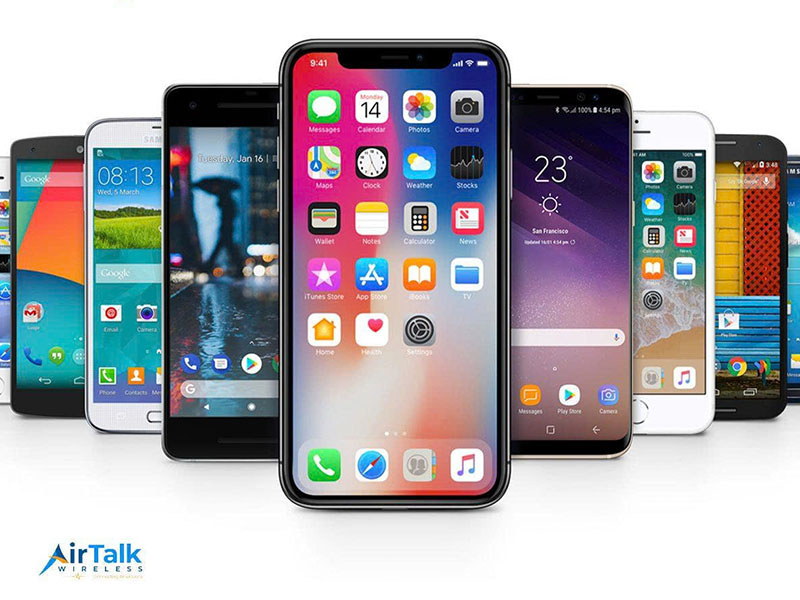
When your eligibility is confirmed, you will be directed to the device gallery.
- Apple iPhone series: iPhone 11, iPhone XR, iPhone 8, and iPhone 7.
- Samsung Galaxy series: Galaxy S20 FE 5G, Galaxy A42 5G, Galaxy A32 5G, and Galaxy A21.
- Other Brands: Models from Motorola, LG (like the G7 ThinQ), TCL, and Hot Pepper (such as the Verde A67L)
Please note that the device options will vary depending on the provider’s stock at the moment you apply, and your location.
Step 4: Provide personal information and documentation
You will need to fill out your legal name, date of birth, and the last four digits of your Social Security number.
As an SSI recipient, you will be asked to upload a digital copy of your SSI Statement of Benefits or your current Benefit Verification Letter
Step 5: Confirm and receive your device
Review your shipping address and submit your application. After the request – often within minutes, AirTalk will process your order.
Your free smartphone and SIM kit will be shipped to your doorstep, typically arriving within 7-14 business days, ready for activation.
Note: Eligibility varies by state and program. Offers depend on availability and qualifications. AirTalk Wireless operates under the federal Lifeline Program as an Eligible Telecommunications Carrier (ETC). Service is non-transferable and limited to one service per household.
5. FAQs
Will my SSI payment decrease if I move to another state?
It can. The federal SSI amount stays the same, but some states offer extra payments called state supplements. If you move to a state with a lower supplement – or none at all, your total benefit may decrease.
Do I need to report my move to the SSA?
Yes. You must report your new address and living situation to the Social Security Administration within 10 days after the month you move. Not reporting on time could lead to overpayments or interruptions.
Will my Medicaid automatically transfer to my new state?
No. Medicaid is managed at the state level, so you’ll need to reapply in your new state. It’s best to apply as soon as you move to avoid gaps in healthcare coverage.
Can my living situation affect my SSI after moving?
Yes. If your housing costs change – like moving in with family or sharing expenses- your SSI benefits may be adjusted because the program is based on financial need.
>>> Read more: Essential Person SSI: Who Qualifies and How It Affects Your Benefits
Final Words
So, will my SSI change if I move to another state? The federal benefit remains stable, but your total payment may shift due to state supplements and living arrangements.
Reporting your move promptly and planning for changes in programs like Medicaid are essential steps.
By understanding these factors ahead of time, you can relocate with confidence and minimize disruptions to your benefits.