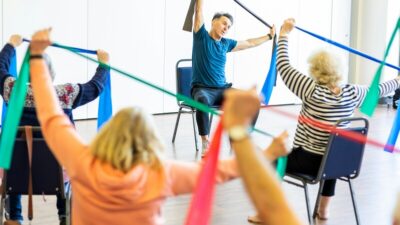


Older adults often experience difficulties such as unsteadiness when standing up from a chair or tripping on uneven ground, often stemming from one thing: weak legs. Leg strengthening exercises for seniors rebuild that strength gradually, whether starting from a seated position or already comfortable standing with support.
This guide covers 9 exercises across three mobility levels, how often to do them, and safety tips to keep in mind before starting.
1. Why Leg Strength Matters for Seniors
Strong leg muscles help seniors stay mobile, balanced, and independent. Your legs support many everyday movements, including walking, climbing stairs, standing up from a chair, and maintaining stability while moving.
Regular leg strengthening exercises for seniors can help:
- Improve balance and stability, which may help lower the risk of falls.
- Make daily activities easier, such as walking, getting in and out of a car, or climbing stairs.
- Support independence by maintaining the strength needed for everyday movement.
- Reduce strain on the knees and hips by strengthening the muscles that support these joints.
- Help maintain muscle mass and function as natural muscle loss becomes more common with age.
- Build confidence when moving, especially when walking on uneven surfaces or changing positions.
The best leg exercises for seniors focus on controlled, functional movements that gradually improve strength without placing unnecessary stress on the joints.
2. Seated Exercises for Low Mobility or Beginners
Seated exercises for legs for seniors are a good starting point for those with limited mobility, poor balance, or little experience with strength training. A chair provides extra stability, allowing you to focus on strengthening your leg muscles without worrying as much about standing balance.
Choose a sturdy chair that does not roll, sit with both feet supported on the floor, and move slowly and with control.
Try these beginner-friendly leg strengthening exercises for seniors:
- Knee Extensions: Sit tall and slowly straighten one leg until it is nearly parallel with the floor. Hold for 2–3 seconds, then lower it with control. Repeat 8–10 times per leg.
- Seated Marches: Lift one knee a few inches off the floor, lower it, and repeat with the other leg. Continue alternating for 20–30 seconds.
- Seated Heel Raises: Keep your toes on the floor and lift both heels as high as comfortably possible. Slowly lower them and repeat 10–15 times.
Start with one set and increase gradually as your leg strength improves. If you feel pain, dizziness, or unusual discomfort, stop the exercise.
>>> Read more: 10 Best Grip Strength Exercises to Build Stronger Hands and Forearms
3. Standing Leg Strength Exercises for Seniors With Support
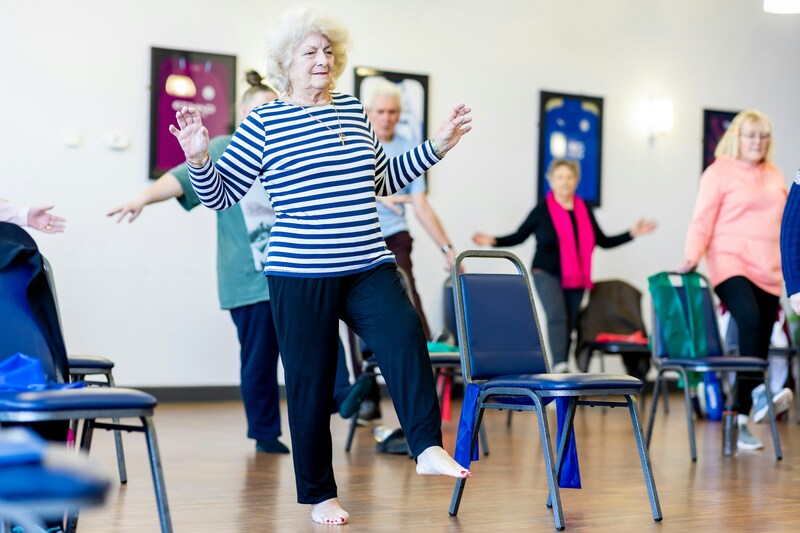
Standing leg exercises help seniors build lower-body strength while also improving balance and stability. If you are ready to progress beyond seated exercises, use a sturdy chair, countertop, or wall for support. Keep movements slow and controlled, and avoid holding onto unstable furniture.
Try these beginner-friendly standing exercises:
- Sit-to-Stand (Chair Squats): Sit near the front of a sturdy chair with your feet flat on the floor. Stand up slowly, then lower yourself back down with control. Use your hands if needed. Repeat 8–10 times.
- Standing Calf Raises: Hold the back of a chair for balance. Slowly rise onto your toes, pause briefly, and lower your heels back to the floor. Repeat 10–15 times.
- Side Leg Raises: Stand tall while holding a chair. Slowly lift one leg out to the side without leaning your upper body, then lower it. Repeat 8–10 times per side.
Start with one set and increase gradually as your strength and balance improve. Stop if you feel pain, dizziness, or unusual discomfort.
4. Leg Strengthening Exercises for Seniors With Joint Pain
Joint pain does not always mean seniors should avoid leg-strengthening exercises. In many cases, low-impact and controlled movements can help maintain muscle strength while placing less stress on the knees and hips. The key is to work within a comfortable range of motion and avoid movements that cause sharp or worsening pain.
Consider these lower-impact options:
- Partial Wall Sits: Lean against a wall and slide down only as far as feels comfortable. Hold briefly, then return to standing. A shallow position can reduce stress compared with a deep squat.
- Pool Walking or Water Exercises: Water supports part of your body weight while adding gentle resistance, making it a lower-impact option for the joints.
- Seated Resistance Band Leg Presses: Loop a resistance band around the feet and slowly press one or both legs forward against the resistance while seated.
- Supported Leg Extensions: Sit in a sturdy chair and slowly straighten one leg, then lower it with control.
Start with light resistance and a comfortable range of motion. Stop if an exercise causes sharp, sudden, or worsening pain, and consider speaking with a healthcare professional or physical therapist about exercises that fit your specific needs.
>>> Check more: Best Golf Exercises for Seniors to Improve Swing and Stay Injury-Free
5. How Often Should Seniors Do Leg Strengthening Exercises?
Most seniors can benefit from doing leg strengthening exercises for seniors at least 2 days per week. Avoid training the same muscles on consecutive days when possible, as recovery helps the muscles adapt and rebuild.
Start with short sessions of about 10–20 minutes and choose a comfortable number of repetitions. As your strength improves, gradually increase the repetitions, resistance, or difficulty rather than making sudden changes.
Regular walking and other activities can also support leg strength, balance, and overall mobility. The ideal routine depends on your fitness level and individual needs, so start slowly and adjust as needed.
6. Safety Tips Before You Start
Before starting leg strengthening exercises for seniors, seniors should focus on safety, proper form, and gradual progression. Begin with exercises that match your current strength and balance level rather than trying advanced movements too soon.
Keep these safety tips in mind:
- Use stable support when needed, such as a sturdy chair, countertop, or wall.
- Wear supportive, non-slip shoes to help reduce the risk of slipping.
- Move slowly and with control instead of rushing through repetitions.
- Start with a comfortable range of motion and increase repetitions or resistance gradually.
- Stop if you feel sharp pain, dizziness, or unusual discomfort.
- Check with a healthcare professional before starting a new exercise routine, especially if you have concerns about your mobility or ability to exercise safely.
A safe, consistent routine is generally more beneficial than pushing through discomfort or progressing too quickly.
>>> Related: 10 Best Posture Exercises for Seniors to Improve Alignment and Reduce Pain
7. FAQs
What is the best exercise for seniors to strengthen their legs?
There is no single best exercise, since the right choice depends on current mobility and any joint pain. Chair squats and standing calf raises are common starting points for most seniors without major joint restrictions.
How can I strengthen my weak legs in old age?
Starting with seated exercises like knee extensions and gradually progressing to standing, supported movements tends to work well.
Consistency over several weeks matters more than the intensity of any single session.
What is the best exercise to strengthen weak legs?
Seated marches and knee extensions are gentle starting points for very weak legs, while chair squats build more strength once basic movement feels comfortable. The right exercise depends on current strength and any pain present.
How can I build leg muscle after 70?
Regular strength training two to three times a week, combined with adequate protein and recovery time between sessions, supports muscle building at any age.
Progression matters here too, gradually adding reps or resistance as the current level feels too easy.
Final Thoughts
Start with the leg strengthening exercises for seniors above if standing feels unsteady, and move to the standing versions only once those feel solid. A stable chair or wall nearby removes most of the risk from this kind of training, so there’s little reason to skip it out of caution.
A few consistent sessions each week, more than any single hard workout, is what actually rebuilds leg strength over time.